







You must be 21+ years of age or older to view this site. If you are under 21 - you must leave.

Low Voltage vs High Voltage Vaping Explained | Strio
Low Voltage vs High Voltage Vaping: How to Find the Setting That Works
This guide is intended for adults of legal age (21+ in the United States). Vaping laws vary by state and city, so always check your local regulations before buying or using any product.
Anyone who owns an adjustable battery eventually asks the same question: should I run it low, or turn it up? The debate over low voltage vs high voltage vaping fills forums and store conversations, and the answers people give often contradict each other. One person swears that the lowest setting gives the best flavor. Another says anything below the top level feels weak. Both can be right, because the correct setting depends on the cartridge in front of you, the oil inside it, the weather, and your own preferences.
At Strio, we help customers across the USA choose and tune their gear, and voltage questions are among the most common we hear. This guide explains what voltage does inside your device, how low and high settings differ in flavor, coil wear, and battery use, and how to choose a setting for each cartridge you own. By the end, the low voltage vs high voltage vaping question will stop being confusing and start being a simple, practical choice you can make in seconds.
What Voltage Actually Means for Your Cartridge
A cartridge contains a small heating element called a coil. When your battery sends power through it, the coil warms the oil until it turns into vapor. Voltage is the electrical pressure that pushes that power through the coil, and in simple terms, more voltage means a hotter coil. That is the entire foundation of the low voltage vs high voltage vaping discussion.
Think of a stovetop burner. On a low setting, a pan warms gently and food cooks slowly. On a high setting, the pan heats quickly, and if you are not paying attention, the food scorches. Voltage works the same way inside a cartridge. Low voltage produces gentle heat. High voltage produces intense heat. Neither is automatically better, because different foods, and different oils, need different temperatures.
The Role of Coil Resistance
Every coil has a resistance, measured in ohms. Resistance and voltage together decide how much power the coil actually receives. A coil with lower resistance draws more current at the same voltage and heats more, while a coil with higher resistance heats less. Cartridge manufacturers design their coils to work best within a certain voltage window. That is why a setting that feels perfect on one product can feel harsh on another, and why understanding low voltage vs high voltage vaping helps you get the best from every cartridge.
Why Battery Settings Are Usually Simple
Most cartridge batteries offer three or four preset levels instead of a precise dial. Common levels fall somewhere around 2.5 to 4.0 volts, with typical steps near 2.8, 3.2, and 3.7 volts, though every brand chooses its own numbers. The lowest step is your gentle option, the middle is the all-purpose choice, and the top step is for thick oil, cold weather, or users who want a stronger response.
What Happens at Low Voltage
A low voltage setting heats the coil gently. Oil warms without being pushed to extremes, so you get a milder, more delicate experience. Many people find that low settings bring out subtle flavor notes that hotter settings wash away.
The Advantages of Low Voltage
The first advantage is flavor. Aromatic compounds in oil are sensitive to temperature, and many of the most delicate ones evaporate at lower heat. Running low lets those compounds shine instead of being overwhelmed by a burnt edge. The second advantage is smoothness. Lower temperatures produce less harshness, which makes each draw gentler on the throat.
The third advantage is coil longevity. A coil that runs cooler experiences less stress, builds up less residue, and lasts longer. If you want to stretch a cartridge as far as possible, low voltage is your friend. The fourth advantage is battery life. Lower power draw means your battery lasts longer between charges. Finally, low settings reduce the chance of burning oil on the first few draws, which makes them the safest place to start with any new cartridge.
The Drawbacks of Low Voltage
Low voltage is not perfect. Thick oil may not warm enough to flow freely, which can produce a muted or restricted draw. In cold weather, oil thickens further, and a low setting can leave you with a weak experience. Some users also find that low settings deliver less visible response and a lighter effect overall, which may not suit those who prefer something fuller.
What Happens at High Voltage
A high voltage setting drives the coil to a much higher temperature. Oil heats quickly and strongly, so you get a fuller and more immediate response. This is the setting people reach for when they want intensity.
The Advantages of High Voltage
High voltage handles thick oil well. Because the coil is hotter, viscous oil flows and vaporizes more readily, which prevents the gurgling and weak draws that thick products can cause on low settings. High voltage also helps in winter, when cold weather thickens everything. Some users simply prefer the fuller, more robust feel of a hot coil, and for them the top setting is what makes a cartridge worth using.
The Drawbacks of High Voltage
The trade-offs are significant. A hotter coil can scorch oil, leaving a harsh, acrid taste and dark residue. It wears the coil down faster, so cartridges may taste burnt well before they are empty. It drains the battery faster, and it can make each draw feel rough. Delicate flavors are also the first casualty of high heat, since many aromatic compounds break down or burn away. If you have ever wondered why a promising cartridge disappointed you, an unsuitably high setting is one of the most common reasons.

Low Voltage vs High Voltage Vaping: A Direct Comparison
Putting the two side by side makes the choice clearer. In flavor, low voltage generally wins, because it preserves delicate notes, while high voltage tends to produce a bolder but sometimes harsher profile. In smoothness, low voltage is gentler and high voltage can be rough. In coil life, low voltage is far kinder, and high voltage shortens the life of a cartridge. In battery life, low voltage uses less power and high voltage uses more.
Where high voltage wins is in handling thick oil and cold conditions, and in delivering a stronger response. That is why the best answer to the low voltage vs high voltage vaping question is rarely one or the other. The best answer is the lowest setting that gives you a good experience with that particular cartridge. Start low, and only step up when you have a reason to.
Why Starting Low Is the Golden Rule
Experienced users share one habit above all others: they begin at the lowest setting. This is not timidity. It is strategy. If you start low and the result is weak, moving up one level costs you nothing. If you start high and the result is burnt, the damage to the coil has already been done, and it cannot be undone. Starting low is free, and starting high can be expensive.
Begin with a single gentle test draw at the lowest level. If the flavor is thin or the draw feels restricted, step up one level and test again. Stop at the first setting that feels right. This simple method protects your cartridges and teaches you how each product behaves.
How Oil Thickness Changes the Answer
Oil viscosity is one of the biggest factors in the low voltage vs high voltage vaping decision. Thin oil flows easily and heats quickly, so it usually performs well at low or medium settings. Thick oil resists flow and needs more heat to move through the coil and vaporize properly.
If a cartridge gurgles, produces very little, or feels like you are pulling against resistance, the oil may be thick, and a modest bump in voltage often solves the problem. If a cartridge tastes scorched or feels harsh, the oil may be thin or the coil sensitive, and a step down will smooth it out. Learning to read these signals turns you into your own troubleshooter. Many people also pair a moderate setting with a preheat mode when oil is thick, which warms it gently before use instead of forcing a high voltage.
Weather, Seasons, and Storage
Temperature affects oil more than most beginners realize. In cold weather, oil becomes thicker and moves slowly toward the coil. You may find that a cartridge that worked beautifully in July feels sluggish in January. Raising your setting by one level in winter often restores performance. Better yet, let a cold cartridge warm to room temperature before use, because a cartridge pulled straight from a freezing car can perform poorly at any voltage.
In hot weather, oil thins and flows freely, which means you can usually lower your setting. Leaving a cartridge in a hot car can also cause leaking, so store your gear in a cool place. Keeping your setup in a case shielded from extreme temperatures is one of the simplest ways to make any voltage setting work better. If you are building a kit, our guide to the best vape accessories for beginners explains which cases and storage options work best.
Matching Voltage to Coil Type
Not all coils respond to voltage the same way. Different designs have different ideal ranges, and knowing this can save you from unnecessary experimentation.
Ceramic Coils
Ceramic coils are known for even heating and pure flavor, and they tend to work well at low to medium settings. They can handle a slightly higher setting than some other designs, but pushing them to the maximum often wastes their strength. We cover how these coils work in depth in our article on ceramic vape cartridge technology explained.
Other Coil Styles
Some cartridges use metal or wick-based coils, which heat quickly and can respond sharply to voltage changes. These often need a gentler touch. If the packaging lists a recommended range, follow it. If no guidance is provided, low to medium is a safe starting point.
Signs You Are at the Wrong Setting
You do not need a meter to know when your voltage is off. Your senses will tell you.
Signs the Voltage Is Too High
A burnt or acrid taste, a harsh feel in the throat, dark residue near the mouthpiece, and a cartridge that seems to run out unusually quickly all point to overheating. If you notice these, drop down at least one level. If the cartridge has already burned for several sessions, the coil may be damaged, and lowering the setting may only partially help.
Signs the Voltage Is Too Low
A weak or thin flavor, little visible response, gurgling, or a draw that feels blocked suggest too little power. Raise the setting one level at a time. If nothing changes even at a higher level, check the connection first, since dirt on the contacts can imitate a low power problem.
When the Problem Is Not Voltage at All
Sometimes the trouble lies elsewhere. A blinking light and no firing usually indicates a connection problem, not a voltage issue. A clogged cartridge, a nearly empty cartridge, or a poorly seated adapter can also cause symptoms that look like a voltage mismatch. Clean the threads and center pin with a cotton swab lightly moistened with isopropyl alcohol, let them dry completely, and reconnect before changing settings. For more on diagnosing issues, see our guide on common vape cartridge problems and solutions.
Voltage and Battery Life
Higher voltage draws more power, so your battery empties faster on the top setting. The effect is usually modest, but it adds up if you use your device heavily. Running at a moderate level stretches each charge and reduces how often you need to plug in.
Capacity matters even more than voltage for run time. A battery in the range of roughly 400 to 650 mAh suits most users. And when it is time to recharge, a model with modern charging makes life easier. Our explainer on USB C vape batteries explained covers why that port has become the preferred standard and how to charge safely.
Choosing a Battery That Gives You Real Control
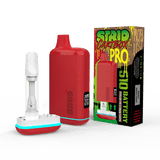
To take advantage of everything in this guide, you need a battery that lets you choose. Fixed voltage batteries deliver one output, which is fine if that output happens to suit your cartridge and useless if it does not. An adjustable battery lets you make the low voltage vs high voltage vaping decision yourself.
What to Look For
Look for at least three settings with a spread that covers both gentle and stronger outputs. Choose clear LED color codes or a display so you always know your level. Confirm that the battery includes overcharge, short circuit, and auto shut-off protections. Check for a proper 510 thread so your cartridges fit, and choose USB-C charging if you can. We explain the wider benefits in our article on adjustable voltage vape battery benefits, and our guide on how to choose the right vape cartridge battery walks through the complete decision.
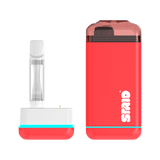
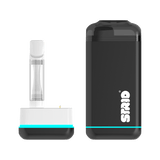
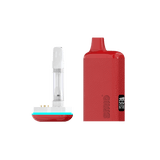
You can browse a curated range of adjustable batteries at Strio, where product details are listed clearly so you can compare voltage ranges, capacity, and features.
A Simple Voltage Routine You Can Follow
When you attach a new cartridge, check the packaging for a recommended range. Set your battery to the lowest level and take one gentle test draw. If it feels weak, move up one level and test again. Repeat only until the experience feels right. Make a note of the setting for that cartridge so you do not have to rediscover it. In cold weather, try one level higher. In warm weather, try one level lower. If you ever notice a burnt taste, drop down at once and let the cartridge rest.
Give the coil a few seconds between draws. Rapid back-to-back puffing overheats the coil even at a modest setting, and no voltage level can save a cartridge from constant heat. Slow, spaced draws protect flavor and extend cartridge life more reliably than any setting change.
Common Mistakes in the Low Voltage vs High Voltage Vaping Debate
The most frequent mistake is assuming that higher means better. More power does not create more flavor. It often destroys flavor. The second mistake is the opposite: buying an adjustable battery and never changing the setting, which wastes its main advantage. The third mistake is ignoring the cartridge maker's recommended range, which comes from the people who designed the coil. The fourth is blaming voltage for problems caused by dirty contacts or loose connections. The fifth is neglecting safe habits.
Whatever setting you choose, charge with a quality cable on a hard, non-flammable surface, never leave a battery charging unattended or overnight, and keep it away from heat. If a battery swells, overheats, or becomes damaged, stop using it and recycle it through a proper battery drop-off program.
Safety Notes for Every Voltage Setting
Voltage affects heat, and heat affects safety, so a few reminders are worth repeating. Never use a battery that is dented, swollen, or leaking. Store your device in a protective case away from coins and keys that could cause a short circuit. Use the lock function, often five quick clicks, so the battery cannot fire in a pocket or bag. When flying, lithium batteries generally must travel in your carry-on rather than checked luggage, so check current TSA and airline guidance before you go. Local laws about carrying and using vape products vary from state to state, so review your destination's rules before you travel.
So Which Is Better: Low or High?
For most cartridges and most people, the answer leans toward the low to middle settings. They protect flavor, preserve coil life, save battery, and keep the experience smooth. High settings have a real place for thick oil, cold weather, and users who want a stronger response, but they are the exception, not the default.
The most useful way to think about low voltage vs high voltage vaping is as a tuning process, not a contest. Start low, listen to what the cartridge tells you, and adjust one step at a time. Combine a well-chosen setting with clean contacts, a quality battery, and good storage habits, and you will get the best from every cartridge you own.
Ready to take control of your setup? Explore adjustable batteries and accessories at Strio, and keep learning with our guides on how to improve vape cartridge flavor and vape cartridge compatibility.
Frequently Asked Questions
Is low voltage or high voltage better for flavor?
Low to medium voltage is generally better for flavor. Gentle heat preserves delicate aromatic compounds, while high heat can burn oil and produce a harsh taste. Start at the lowest setting and only increase if the experience feels weak.
Does high voltage damage vape cartridges?
It can. Running a cartridge at too high a setting can overheat the coil, scorch the oil, and leave residue that shortens the cartridge's life. Starting low and adjusting one level at a time is the safest way to protect your cartridges.
Which voltage should I use in cold weather?
Cold weather thickens oil, so raising your setting by one level often helps. It is even better to let the cartridge warm to room temperature before use, and to use a preheat mode if your battery has one.
Does voltage affect how long my battery lasts?
Yes. Higher voltage draws more power, so the battery drains faster. The difference is usually modest, but using a moderate setting will extend the time between charges.
How do I know if my voltage is too high?
A burnt or acrid taste, a harsh feel in the throat, dark residue near the mouthpiece, and a cartridge that empties unusually fast all suggest the setting is too high. Drop down one level and test again.