








You must be 21+ years of age or older to view this site. If you are under 21 - you must leave.

510 Thread Battery Voltage Settings Explained
510 Thread Battery Voltage Settings Explained – The Complete Guide
Understanding 510 thread battery voltage settings explained in plain language can unlock an entirely new level of enjoyment from your vaping sessions. Voltage is one of the most misunderstood aspects of vaping, yet it has one of the biggest impacts on your experience. Get the voltage right and you enjoy smooth, flavorful draws with efficient oil consumption. Get it wrong and you risk burning your oil, damaging your cartridge, or simply wasting money on a subpar experience.
This guide from Strio covers everything you need to know about 510 thread battery voltage settings — from what the numbers mean to how to find the sweet spot for your specific oil and cartridge combination.
What Is Voltage in the Context of Vaping?
Before getting into the specifics of 510 thread battery voltage settings explained for different use cases, it helps to understand what voltage actually means in the context of a vape battery. Voltage is the electrical pressure that drives current from the battery through the coil inside your cartridge. When this current passes through the coil, it heats up and vaporizes the oil or concentrate inside the cartridge.
Higher voltage means more electrical energy flowing to the coil, which means higher heat and faster vaporization. Lower voltage means less energy, lower heat, and a gentler vaporization. The ideal voltage setting depends on the type of oil in your cartridge, the resistance of the coil, and your personal preference for vapor density and flavor.

The Standard Voltage Range for 510 Batteries
Most 510 thread batteries, including those in the Strio lineup, operate across a voltage range of roughly 2.0V to 4.2V. Within this range, there are distinct zones that correspond to different vaping experiences. Having 510 thread battery voltage settings explained across this spectrum gives you a roadmap for experimenting with your setup.
The lower end of the spectrum, from about 2.0V to 2.8V, produces cool, gentle vapor with maximum flavor preservation. This range is ideal for live resins, full-spectrum oils, and high-terpene extracts where taste is the priority. The mid-range, from approximately 3.0V to 3.3V, is the sweet spot for most standard distillate cartridges, delivering a balance of flavor and vapor density. The upper range, from 3.6V to 4.2V, generates hot, thick vapor clouds and is better suited for thick, high-viscosity oils that need more heat to flow through the coil.
Low Voltage Settings – Flavor First
When 510 thread battery voltage settings are explained from a flavor-focused perspective, the low voltage zone is where things get interesting. At 2.4V, you are essentially dabbing at a low temperature — the oil heats slowly, terpenes remain intact, and every draw is packed with nuanced flavor that would be destroyed at higher temperatures.
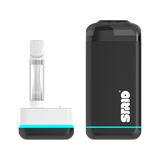
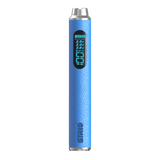
If you are using a premium oil cartridge with a complex flavor profile, using a low voltage setting is the best way to honor that craftsmanship. Strio batteries like the Cartboy Mellow 1g 510 Battery are well-suited to lower voltage, smooth-draw vaping, offering a relaxed, flavor-forward experience that is perfect for unwinding at the end of the day.
Mid-Range Voltage – The Sweet Spot
The mid-range voltage zone — roughly 3.0V to 3.3V — is what most 510 thread battery voltage settings guides identify as the universal sweet spot. At this range, you get a satisfying balance of vapor production and flavor retention. The hit is smooth enough to enjoy comfortably but robust enough to feel substantial.
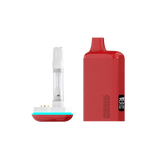
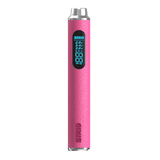
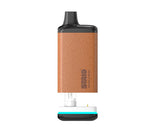
Most distillate cartridges are formulated to perform best at this temperature range, which is why the majority of Strio's variable voltage batteries default to a mid-range setting. The Cartbox Pro 2g 510 Battery and the Raven 510 Battery both shine in this mid-range zone, delivering consistent, enjoyable sessions that most vapers will find immediately satisfying.
High Voltage Settings – Power and Clouds
The upper voltage range of 3.6V to 4.2V is where 510 thread battery voltage settings deliver their most powerful performance. At these settings, oil is vaporized rapidly and completely, producing thick, dense clouds of vapor. This is the preferred range for experienced vapers who prioritize cloud production and intensity over delicate flavor notes.
It is worth noting that high voltage settings can also cause cartridges to burn out faster if used consistently at max power. The key is to use high voltage settings intentionally — when you want a big hit — rather than as a default. The Cartboy Pro 3g 510 Battery from Strio handles higher voltage ranges particularly well, given its design for larger, high-capacity cartridges that can absorb the additional power without issue.

How to Find Your Ideal Voltage Setting
Now that you have 510 thread battery voltage settings explained across the full spectrum, the next step is finding your personal sweet spot. The best approach is to start low and work your way up. Begin at the lowest setting on your battery and take a few slow, controlled draws. Pay attention to the flavor and the density of the vapor. If the vapor feels thin or lacks punch, bump the voltage up by one step and repeat the process.
Most Strio batteries with variable voltage settings allow you to cycle through three to five settings with a simple multi-click sequence on the button. It only takes a few minutes to find the ideal setting for a new cartridge, and once you know it, every session becomes more consistent and enjoyable. This methodical approach is the practical application of having 510 thread battery voltage settings explained properly.
Voltage and Coil Resistance – A Brief Introduction
For those who want to go deeper into the science, it is worth knowing that voltage interacts with coil resistance to determine actual wattage — the real measure of how much heat is being generated. This relationship is described by Ohm's Law. Lower resistance coils heat up faster and require less voltage to achieve the same temperature as higher resistance coils.
Most pre-filled cartridges have coils with a resistance between 1.0 and 2.5 ohms. At the standard mid-range voltage of 3.0V to 3.3V, a 1.5-ohm coil produces about 6 to 7 watts of power, which is comfortably within the optimal range for most oils. This is another reason why 510 thread battery voltage settings in the mid-range are the starting point most experienced vapers recommend.
Strio's Approach to Voltage Control
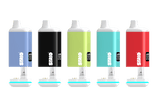
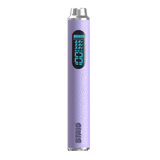
At Strio, voltage control is taken seriously across the entire product lineup. Rather than offering fixed-voltage batteries that lock users into a single experience, Strio has made variable voltage a core feature of its flagship products. The Fly High 2g 510 Battery, the Cartbox Pro, the Raven, and several other models all feature intuitive voltage adjustment systems that put control in your hands.
Strio's approach reflects a broader philosophy: vaping should be personalized, not one-size-fits-all. Every user's preferences are different, every oil has a different ideal temperature, and every session deserves to be calibrated to the moment. Understanding 510 thread battery voltage settings is the foundation of that personalization.
FAQs – 510 Thread Battery Voltage Settings Explained
What happens if I use too high a voltage on my cartridge?
Using voltage that is too high for your cartridge can burn the oil, produce a harsh or unpleasant taste, damage the coil, and shorten the life of your cartridge. Always start at a lower setting and increase gradually.
What is the best voltage setting for distillate cartridges?
For most standard distillate cartridges, a voltage setting between 3.0V and 3.3V delivers the best balance of vapor production and flavor. Strio batteries in this range perform exceptionally well with popular distillate products.
Can low voltage damage a thick oil cartridge?
Not damage, but it can result in poor performance. Very thick oils require higher heat to flow through the coil, so using a very low voltage can result in weak vapor or clogging. If you notice your cartridge is not drawing well, try increasing the voltage slightly.
Do all 510 batteries have adjustable voltage settings?
No. Some entry-level batteries operate at a fixed voltage, while premium batteries like those in the Strio lineup offer multiple adjustable settings. If control over your vaping experience is important to you, always opt for a variable voltage battery.
How many voltage settings do Strio batteries typically offer?
Most variable voltage Strio batteries offer three to four distinct settings that you can cycle through with a quick series of button clicks. Each model's specific voltage range is outlined on its product page at strio.com.